
Resilient healthcare facilities are designed to bounce back during times of disruption—to adapt as quickly as the needs within them change, maintaining their quality and relevance over time.
In healthcare, a mass crisis is always a possibility. Healthcare organizations prepare by doing drills, maintaining paper flowcharts, and installing backup generators, for example. While those are important, an essential and often overlooked part of preparation comes before a healthcare facility is even built.
As organizations scrambled to adjust staffing, operations, and more as COVID-19 took hold, it became clear that their facilities couldn’t respond to the pandemic’s new and unexpected demands. In the absence of facility flexibility, staff created workarounds, doing their best to adjust their processes within the limitations of their environment. The costs of a static healthcare facility are considerable—not only to the bottom line, but also to the ability of staff to care for patients.
When you prioritize resilience in the design of your facilities, you’re enabling them to readily respond to disruptions, big and small, and to maintains their relevance for years to come. (1)
Ready to start building resilience? Here are some capabilities to think about as you begin your planning:
Amenability to contingency planning. Benefit: You have solutions designed and ready for different types of disruptions.
Reliability because of built-in redundancies. Benefit: You can achieve the same purpose using different elements.
Versatility. Benefit: You can use the same element for multiple uses.
Modularity. Benefit: By redeploying components, you can reduce or eliminate downtime.
Integral to a larger working system. Benefit: It allows for micro adjustments to features within the environment.
(2)
… so they can continually support the health system’s strategy for delivering the best patient care, even when that strategy requires a real estate pivot.
Compass System’s modularity reduces downtime during change.
… to accommodate new people, processes, equipment, and even service lines readily with minimal cost and downtime.
Co/Struc System’s adaptability helps your work environment evolve.
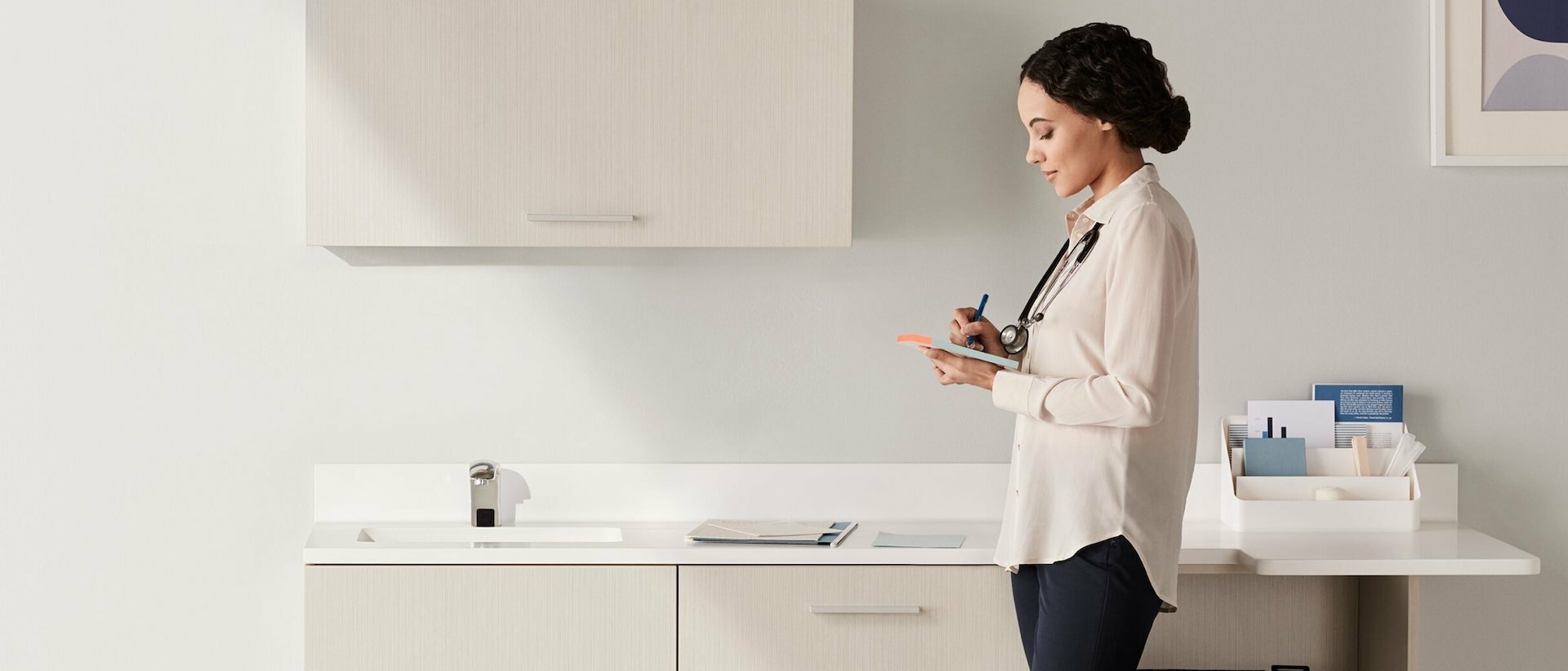
… to help solve problems brought on by a pandemic or other unexpected crisis. For example, one medical center converted its lobby into a clinical triage area for non-COVID-19 patients—complete with nurses stations, screens, chairs, beds, and waiting areas. It repurposed many existing Herman Miller furnishings and casework, moving them into the temporary triage area. This quick and inventive hacking of their space allowed clinicians to provide care in an appropriate setting and reduced the suffering of patients with low-acuity conditions, while also minimizing the potential for spread of the coronavirus.
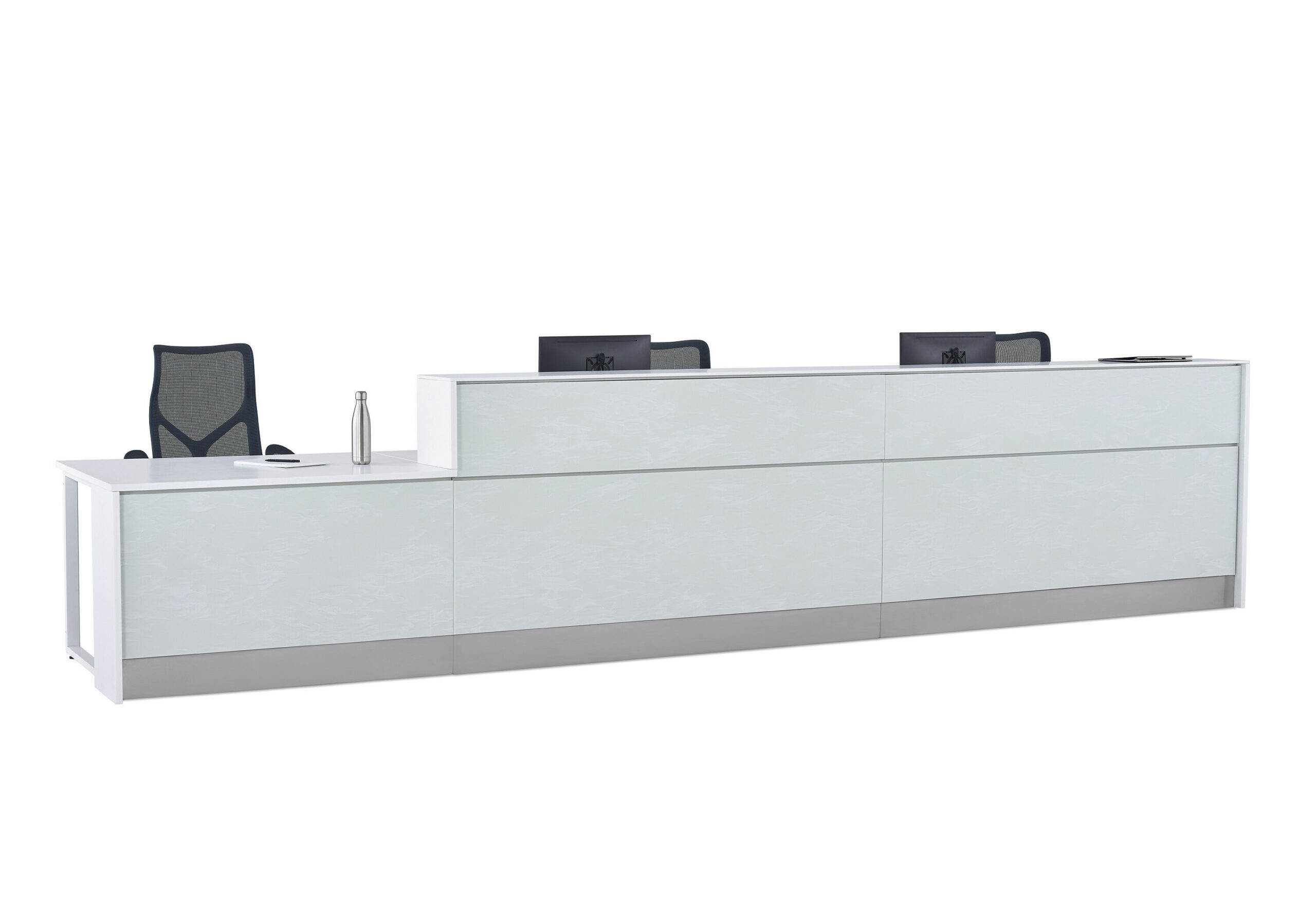
Commend Nurses Station is amenable to contingency planning.
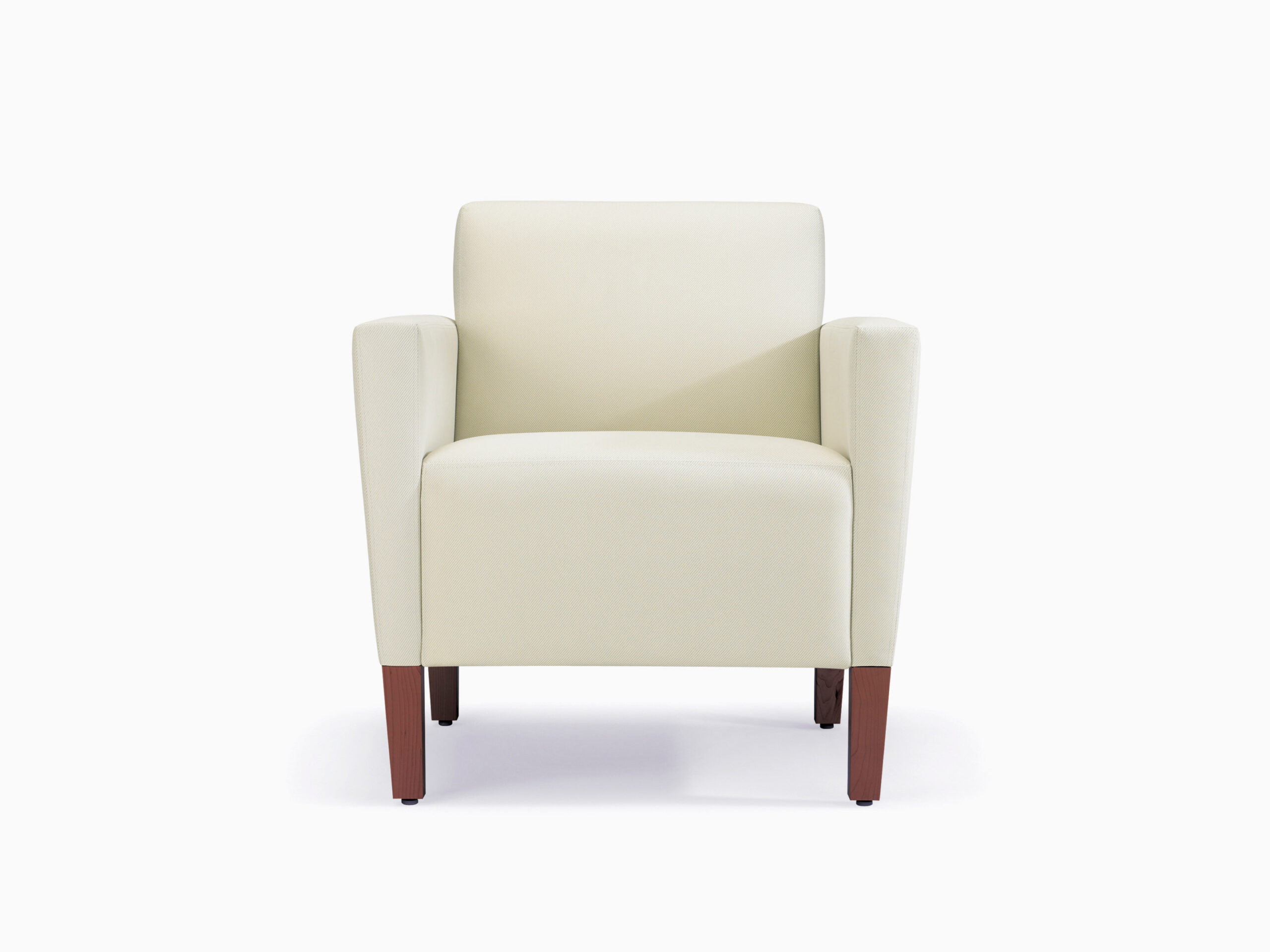
… that can be easily swapped out when damaged, so the chair can stay in use.
Replaceable components extend the lifetime of Nemschoff Brava Collection for a better return on investment.
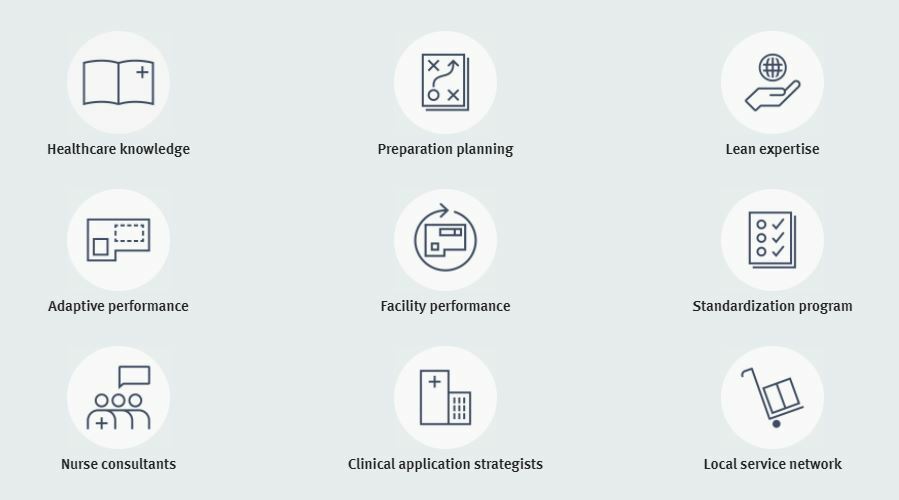
Designing for resilience starts with early planning and makes the most of proven, standardized building blocks. To achieve maximum benefits, partner with organizations that are experienced in optimizing performance continuously over time. Look for organizations that have these four things.
Healthcare expertise:
Experienced professionals who rigorously research and understand the specific requirements of healthcare environments are valuable guides throughout the process.
Reliable building blocks:
A quality, adaptive kit of parts from a reliable partner affords the ability to refresh, reconfigure, and relocate elements of the built environment with minimal downtime or additional cost.
A proven process:
To maximize a facility’s resilience, flexibility needs to be considered at the outset of planning. The process needs to integrate resilience thinking, planning frameworks, and adaptive building components, as well as awareness of what an uncertain future may bring.
A local partner:
Local partners who are with you every step of the way—through design, acquisition, installation, and after project completion—ensure your facility will continuously perform over time.
When you invest in capabilities that make your facility resilient, you’ll benefit from the peace of mind that comes from knowing you’re prepared to perform despite disruptions. Whether the disruption is cyclical, like protecting your facilities against normal wear and tear, or irregular, like a pandemic, your facility can flex to handle it.
By applying our healthcare knowledge and expertise in facility planning, performance, and more, we can help you build more resilient healthcare facilities.
1. Martin Reeves and Kevin Whitaker, “A Guide to Building a More Resilient Business,” Harvard Business Review, July 2, 2020. https://hbr.org/2020/07/a-guid…
2. Ibid.
We use cookies and similar technologies to support site functionality, analyze website performance, and support our marketing efforts. Please click ‘Accept’ to consent to non-essential cookies, or ‘Decline’ to proceed with only strictly necessary cookies. You can find more information in our Cookie Declaration and Privacy Policy.
Manage your cookie preferences below:
Essential cookies enable basic functions and are necessary for the proper function of the website.
Statistics cookies collect information anonymously. This information helps us understand how visitors use our website.
You can find more information in our Cookie Declaration and Privacy Policy.
Newsletter
Sign up for our monthly newsletter featuring workplace insights, project stories, company news, and more.
Creative Office Resources
Continental Office is now part of Creative Office Resources (COR). You’ll find the same local team, now connected to expanded resources, capabilities and expertise nationwide.
Creative Office Resources
HB Workplaces is now part of Creative Office Resources (COR). You’ll find the same local team, now connected to expanded resources, capabilities and expertise nationwide.